Showing posts with label Why the Home Run is Overrated. Show all posts

8/4/26

Do Four Superstars Make a Superteam?

Don't Bank On It

Take a  Clue From the 1968-69 Lakers


Oy! Dept - Here we go again, folks. Another NBA franchice - noteably the Philadelphia 76ers - has faithfully (or in thIs case, desperately) decded that they can slap together a bunch of veteran superstars with various career tradjectories and zero experience playing together as a cohesive unit and expect them to become an immediate superteam and simply waltz to a championship. This s a faulty strategy that can be seen as a copout, as opposed to bulding a title contender through the draft, shrewed trades and free agents (as needed). It's an option but not a safe one.

So, as the low-watt media and their dedicated followers devour this latest publicity scheme, the fact that NBA history is littered wth spectacularly disappointing superteam flameouts - including the 76ers' own Julius Erving - George McGinnis - Doug Collins experiment in 1977 - will never dawn on them. This isn't to say that they always fail - they don't - but depite all the hype, it's hardly a fool-proof solution and often ends up costing the club a bundle in talent, draft picks, money and fan disillusionment.

In light of the superteam failures in recent years in Phoenix, Brooklyn, Houston and Phladelphia (again?!) among others, the one most often rcollected is one of the first and potenially most powerful combo ever sssembled. After the 1967-68 season ended the Los Angeles Lakers were despondent after losing the NBA Finals to the Boston Celtics for the fifth time in seven seasons despite having Elgin Baylor and Jerry West, the greatest scoring combination in NBA history. So, they decided to go for broke by acquiring none other than the most dominant player ever, Wilt Chamberlain, who once scored 100 points in one game.

Elgin Baylor (l), Wilt Chamberlain and Jerry West
Up to that point, Baylor had career regular season averages of 27.7 points, 13.9 rebounds and 4.2 assists per game while West put up 27.4/6.2/6.7 as Baylor's teammate. Now the Lakers were planning to add Camberlain's 36.0/24.6/4.5 to the mix, thereby creating a frightening combination that looked invincible even for the Celtics, winners of 10 of the previous 11 championships (their only loss was to Chamberlain's1966-67 record shattering Philadelphia 76ers, one of the first successful superteams).
1968 - Boston vs L.A., Game 7
                                                     1968 - Boston vs L.A., Game 7
The Lakers started sluggishly as it took a while for them to mesh. They finished 55-27 but they were hardly dominant. For  one thing, Baylor and Chamberlain didn't get along and that created a lot of tension. Nevertheless, the Lakers entered the Finals against (who else?) the Boston Celtics, only  this time, LA  was the heavy favorite. But the Celtics still won the championship anyway! Ain't that a kick in  the head? Teamwork, folks, teamwork.                                  

Match cut to 2026 and nothing's changed much in the minds of some NBA executives because now, by the same token, LeBron James (26.8/7.5/7.4) and Jaylen Brown (20.0/6.5/2.9) are set to join forces with Joel Embiid (27.6/10.8/3.7) and the up-and-coming Tyrese Maxey (21.1/3.2/4.8). Can they pull this off on the same team? People are drooling over the prospects but there are too many very real risks involved here to guarantee a championship incuding those mentioned above. Here are a few more:

Is it, "Man, he's 41!" or "Man, he's 41?!" LeBron is amazing but he is 41 and after a record 23 seasons appears to be starting to slow down. His numbers have trended down for three consecutive years, he averaged only 20.9 ppg last season, his lowest since his rookie season and he's hasn't played all 82 games since 2017-18. And (all together now) he is 41. 

[Interesting tidbit: Including postseason play, LeBron James has logged a staggering total of 73,476 minutes played. That's equal to 51 days and 36 minutes or 1,224.6 hours or more than 7 weeks. That's a hell of a lot of mileage. And (all together now) he's 41. It's only a decreasing matter of time before the Big Uh-Oh occurs.]

Can They Learn to be a Team? Of couse they could but they need to put aside their
egos. Easier said than done, of course. Because when Lebron goes into player/coach/general manager/owner mode (and he will) will his teamates get jealous and start pouting? Will Joel Embiid grow angry that he's no longer the best player on his own team? Will Tyrese Maxie be upset that his average is down from last year? Will Jaylen Brown complain about not getting enough touches? And just how will 76ers coach Nick Nurse handle things if tensions rise?

A lot of issues like these can and likely could happen. But for all we currently know, the 76ers may very well blast their way to the top. With all this said however, nobody should even be thinking of making any guarantees; ony a big, fat question mark because we've been down this road before.


6/24/08

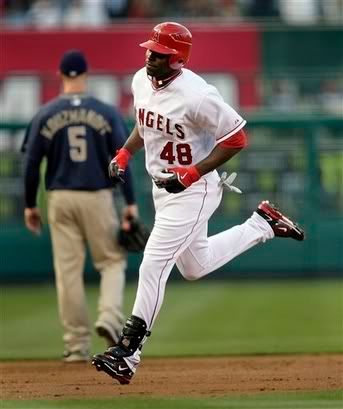
Why the Home Run is Overrated

It’s dramatic. It's intimidating. It can turn a game completely around. It can make a batter an instant hero and it can shatter a pitcher’s world. It boosts statistics and makes for a big free-agent payoff. It’s lauded in song and story. And as a well known commercial once said, "Chicks dig the long ball."

Ever since Babe Ruth put it on the map, the home run has dominated most of the biggest moments in baseball history: The New York Giants’ Bobby Thomson’s Shot Heard Round the World in 1951; Bill Mazeroski's Game 7 ninth inning homer that won it all for Pittsburgh in 1960; Boston's Carlton Fisk's dramatic game-winning homer in the '75 World Series; Reggie Jackson’s three-homer game that won the 1977 World Series for the Yankees; Joe Carter’s Series-clinching homer for Toronto in 1993, and all the accomplishments of Ruth, Roger Maris, Hank Aaron, Ken Griffey Jr., Mark McGwire, Sammy Sosa and Barry Bonds - although the last three names have become tainted due to the stench of performance enhancing drugs. Nevertheless, all these players’ accomplishments grabbed the headlines because, for better or worse, the home run is king. There is no other single statistic in sports that is so universally popular and appreciated.

Okay, now that the stage has been set, let’s get down to business. Bluntly stated, the home run has become overrated (I hate using that word because it’s been mutilated almost beyond recognition. However, unlike the recent Sports Illustrated players’ poll whose useless answers were mostly driven by a combination of petty jealousy, bitterness and yet another tired attempt by a media outlet to generate controversy, the word "overrated" is used in it’s proper context here). Anyway, home runs are glorious, exciting, and all the reasons stated above but it’s not the beginning and end of a player’s impact. Neither is the oft-quoted on-base plus slugging percentage. When it comes down to wins and losses, the most important offensive statistic is Runs Batted In. When there are runners in scoring position any well placed hit is just as important as a home run. If a player drives in 90 runs with 30 homers, his RBIs are most likely coming in bunches, whereas the hitter who drives in 90 with only 15 homers is a lot more consistent. RBIs is the best indicator of how effective a player is in the middle of the lineup.

Not convinced? Okay, here are some pretty clear examples of how deceiving home runs can be. Maestro, if you please:

In 1992 Detroit Tiger Rob Deer hit 32 homers but drove in only 64 runs. In 1996 Minnesota’s Paul Molitor hit only nine homers but drove in 113. Now you tell me: Who was more productive?

Darrell Evans had at least 20 home runs and 80 RBI ten times in his career. Keith Hernandez had seven seasons of at least 83 RBIs but never hit more than 18 homers. Evans’ career-high is 104 RBIs (on 41 homers), while Hernandez’s best is 105, and he did it with only 11. And to prove that St. Louis' old Busch Stadium’s distant fences and artificial turf weren’t the only reasons those numbers could ever happen, let’s go way back in time to the Dead Ball era. In 1902 the Philadelphia Athletics won the pennant and outfielder Socks Seybold led the majors with 16 homers and had 97 RBIs. His teammate, third baseman Lave Cross, drove in 108. Guess how many homers he hit? None. Nada. Zilch. Zero. Now that is situational hitting. No homers were necessary. I could give you many other examples, but that would be like hitting a grand slam with a ten-run lead.

Too many so-called baseball "experts" harp and drone on about how vital home runs are. They don’t have a microbe of a clue of what they’re talking about. One player who got a particularly bad rap on this was Hall-of Famer Rod Carew. He had a lifetime average of .328, had 3053 hits, was a seven-time batting champion, and during his 19-year career he probably had more skill in handling a bat than anyone else in the world. But all people would do was moan, "He doesn’t hit enough home runs." That’s when I began to realize just how ignorant the sports media could be. Even if you’ve never seen Carew hit, all anybody has to do is look at his numbers. Power wasn’t his role. He hit just 92 homers, but he had 445 doubles, 112 triples, 353 stolen bases, scored 1424 runs and his strikeouts-to-at bat ratio was 1:9. Those are perfect numbers for a leadoff or number two hitter, which Carew was for most of his career. However, he was capable of producing, too. In his best season in 1977 he hit .388 and drove in 100 runs with only 14 homers. He perfected his style of hitting and he was smart enough to know that he could be the best hitter in the game without swinging for the fences. Wade Boggs and Tony Gwynn often heard the same mindless criticism for their lack of homers. The obsession with the home run is often about short-sighted thrills for the observer instead of the necessity of contributing to a victory in the best way a player knows how.

But some people are never happy. The opposite side of this coin is Ichiro Suzuki. When he set the record of 262 hits in 2004, former pitcher Rob Dibble, who was on ESPN Radio at the time, foolishly exclaimed, "All he thinks about is hitting." Well, DUHH?!! That’s what a hitter is supposed to think about! 262 hits and 50 walks is better than 200 and 100. Why? It’s almost too simple: A base-on-balls is good, but at the end of the day it’s just that: One base. A hit can be more (When was the last time you heard of a two-base walk?). Bottom line: In this unusual case, when a batter averages 227 hits a year like Suzuki does, you don’t bitch about the walks. And if a batter drives in 100 runs, you don’t bitch about the homers.

If the bases are loaded in a tie game, unless the opposing pitcher throws a bad pitch, I don’t want my hitter automatically swinging from his heels and increasing his chances of striking out and killing the rally. His job is to drive in a run any way he can. A base hit in that scenario is a lot more likely than a home run and the baserunners keep the pressure on the pitcher, thereby making it more likely he’ll throw that bad pitch. A skilled hitter can make a sac fly without swinging out of his cleats. A patient batter can draw a walk. Hell, even a ground ball is better than a strikeout because anything can happen. If the pitcher vapor-locks and throws a room-service meatball, any good hitter has the right to murder that pitch. But he doesn’t have to try and murder every pitch (Ryan Howard, pay attention). Think of winning, not the potential fame and free agent money home runs bring. If you can’t do that, I don’t want you on my team.

By the way, the OBS is a bogus statistic. Combining the on-base percentage and slugging average makes for a new kind of number for stat-heads to drool over (and gives the term "new math" a whole new migraine-inducing meaning). But the fact is, the OBS is misleading because it does not translate into how game-winning the number is. What those sabermetric gnomes need to do is to find a way to figure RBIs into the equation without burying me into submission under an avalanche of numbers. We’ve all been statted to death. Enough, already.

Don’t get me wrong, now. I like home runs as much as anyone. I’m certainly not advocating small-ball, but I want my team to play smart-ball. The home run, while always fun and often important, is not always necessary.